

Why Pipes Under Slabs Fail
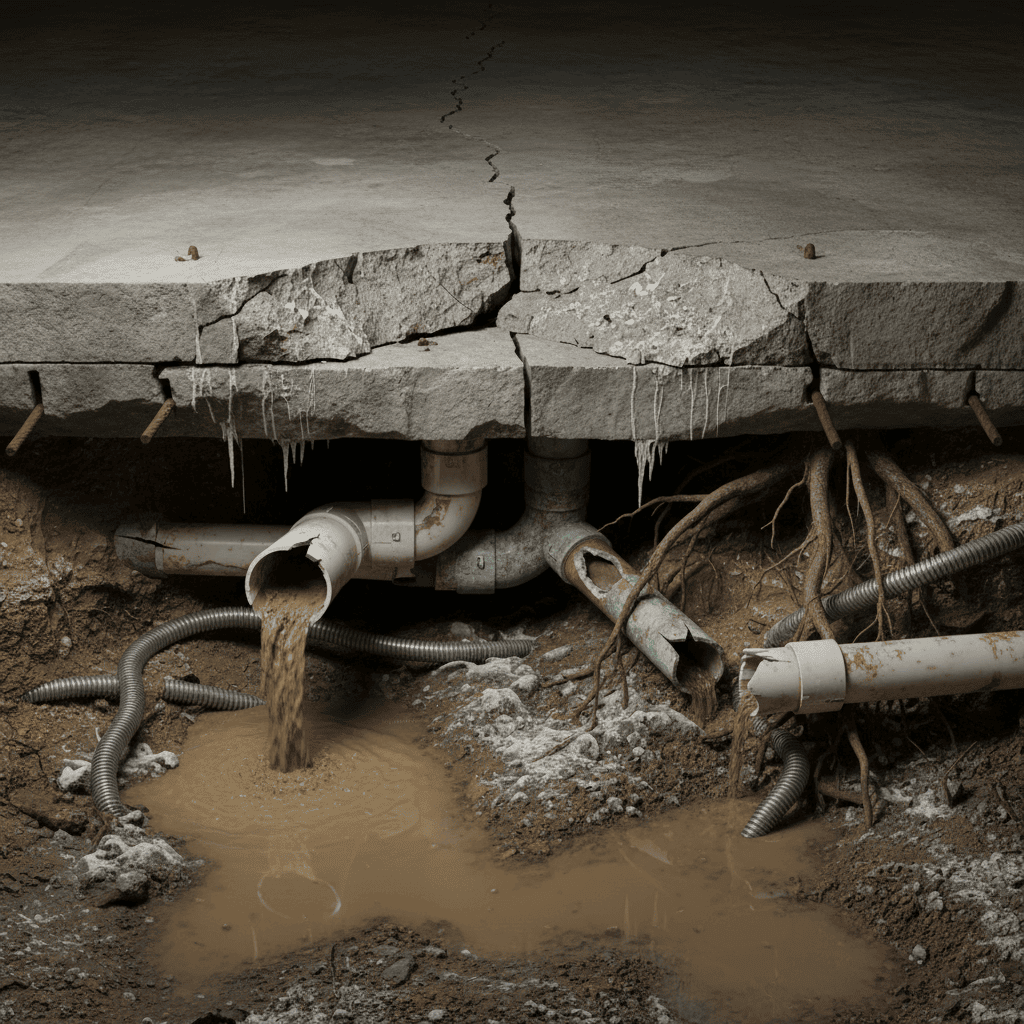
When water pipes run beneath concrete slabs they are hidden out of sight and out of mind. That makes a slow developing problem hard to catch. This article explains common causes of failure for pipes under slabs and gives clear steps you can take if you suspect trouble.
Understanding why pipes fail below foundations helps you spot warning signs early and choose the right repair option. I will cover materials and installation issues that lead to leaks, how leaks show up in the building above, practical repair methods, and sensible prevention tactics you can use to lower the risk of a costly emergency.
Common reasons Why Pipes Under Slabs Fail
Pipes beneath concrete slabs face a mix of mechanical and chemical challenges. Several repeating themes show up in inspections and claim records. Recognizing these root causes makes it easier to prioritize repairs and prevent repeat failures.
- Corrosion and material degradation Metals like cast iron and older copper may corrode over time. Corrosion weakens pipe walls and creates pinhole leaks. Aggressive soil chemistry speeds this process.
- Soil movement and settlement Clay soils that expand and contract, or loose fill that settles, put shifting pressure on rigid pipes. Bends and joints are particularly vulnerable.
- Poor bedding and compaction Pipes installed without proper support can sag or crush under the weight of concrete and vehicles. Fine sand or pea gravel bedding is commonly recommended to prevent point loads.
- Thermal and pressure cycles Repeated heating and cooling or high pressure spikes fatigue materials and joints over years.
- Root intrusion and physical damage Roots seek moisture and can enter small cracks in joints. Construction activity or dropped tools during slab work can also nick or crack pipes.
How installation errors cause failures
Even durable pipe types fail when installation corners are cut. Subpar backfill, incorrect pipe slope, and improper jointing methods shorten service life. Here are specific installation faults that commonly lead to slab leaks.
- Incorrect slope that creates low spots and sediment buildup
- Joints not tightened or glued to specification
- Placing pipes too close to slab underside so concrete loads transfer directly
- Lack of protective sleeves where pipes pass through slab openings
Inspectors often find pipe damage at tight bends where installers used elbows instead of sweeping curves. Small changes at installation save thousands in repair costs later.
Detecting a leak under a slab
Leaking slab pipes rarely appear as an obvious puddle. Instead look for patterns of signs that point to a hidden leak.
- Warm or wet spots in floors
- Localized mold or mildew growth near a particular room
- Sudden unexplained increases on the water bill
- Sounds of running water when no fixtures are in use
- Cracking or sinking of floors or slab sections
Simple checks you can do at home include isolating the house water meter and watching for movement with all fixtures off. If the meter continues to move that is a strong indicator of a leak somewhere in the underground system.
Repair methods for pipes beneath slabs
Repair choices depend on pipe material, leak location, structural risks, and budget. I outline common methods and the practical tradeoffs of each.
Spot repairs and slab cutting
For one or two small leaks the classic approach is to cut the slab at the leak location, replace the damaged section, and patch the concrete. This method is straightforward and tends to have the lowest material cost. Expect disruption to flooring and some curing time for the patch. If the damaged area is close to load bearing elements extra shoring may be required.
Trenchless options and relining
Trenchless repairs reduce surface damage. Options include pipe bursting which breaks an old pipe while pulling a new pipe into place, and cured in place pipe lining that inserts a resin saturated liner which hardens and forms a new pipe within the old one. Trenchless is often faster when long runs are affected. However some joints and lateral connections may not be repairable with lining and may still require small access cuts.
Choosing the right method depends on several factors. For a professional assessment and repair options tailored to your situation consider this resource www.brightwaterplumbingorlando.com/do-pipes-beneath-concrete-foundations-break which explains types of slab leaks and typical repair approaches in local conditions.
Preventive measures to reduce risk
Preventing slab pipe failure starts at planning and continues through regular property maintenance. These practical steps lower the probability of an expensive emergency.
- Choose appropriate pipe materials Modern cross linked polyethylene and schedule 40 PVC resist corrosion and root intrusion better than older metal pipes in many soil conditions.
- Use proper bedding and protective sleeves Sand or pea gravel bedding and sleeves at slab penetrations reduce point loads and abrasion.
- Control landscape water Keep irrigation away from the foundation and avoid planting trees with aggressive roots near perimeter lines.
- Regularly monitor water usage Compare monthly bills and run a meter check to detect hidden use.
- Periodic professional inspections A plumber with the right tools can run a pressure test and use an acoustic leak detector to find developing problems before they break through.
When to call a professional plumber
Timing matters in slab leak situations. A small slow leak that is monitored can sometimes be managed. A leak that is growing, causing floor damage, or creating mold must be addressed quickly. If you find rapid meter movement when all water is off, visible floor damage, or a smell of sewage call a licensed plumber without delay.
Experienced plumbers bring diagnostic equipment such as electronic correlators, thermal imaging cameras, and sewer cameras. These tools let a professional locate the leak with minimal cutting which saves time and money long term. If you are in doubt about a suspicious wet spot or a climbing bill contact a plumber for a diagnostic visit and a clear estimate of repair options.
Costs timelines and what to expect during repair
Expect wide cost variation depending on access and method selected. A small slab cut repair might be a few hundred to a few thousand dollars. Trenchless replacement of a long run can be several thousand to tens of thousands. Always ask for a written estimate that breaks down labor, materials, permits, and concrete restoration.
- Simple slab cut and patch repairs often finish in a day of active work plus concrete curing time
- Trenchless jobs may take one to several days depending on the run length and connections
- Permitting and inspections can add a few days to the schedule
- Expect to protect or remove floor finishes during slab cutting work
Make sure the quote includes warranty terms for both the plumbing work and concrete patch. Many reliable contractors will guarantee water tightness for a period of time. Ask about how the contractor will locate the leak and what guarantees are tied to that diagnostic work.
Practical tips when you suspect a slab leak
Follow a short checklist to reduce damage while you confirm the issue.
- Turn off the main water supply if you see rapid flooding
- Document visible damage and take photos for insurance
- Run a water meter test to confirm continuous loss
- Keep a record of water bills and note sudden changes
- Call a licensed plumber for diagnostics before removing large sections of flooring
Quick action can change a major slab repair into a manageable localized repair. If mold or structural damage is present involve the appropriate specialists early to keep restoration time and cost under control.
Conclusion summary and next steps
Slab leaks are a common but manageable problem when you understand the typical failure mechanisms and the practical options for repair. Corrosion, soil movement, poor installation, and physical damage are frequent culprits. Early detection through simple checks such as a meter test and attention to warm or damp floor areas cuts risk and cost. When a leak is confirmed evaluate repair choices with an experienced plumber who can show tradeoffs for slab cutting and trenchless technologies. Ask for detailed estimates and warranty information before authorizing work. If you suspect a slab leak act early to limit damage. Contact a reputable local plumbing service for a diagnostic visit and a clear plan to get the problem fixed and the floor restored. Quick action reduces repair costs and returns the property to normal use more rapidly.
Advertisement

Advertisement

Recent Posts
Sponsor